

WMU Hosts International Summit on the Future of Autonomous Shipping
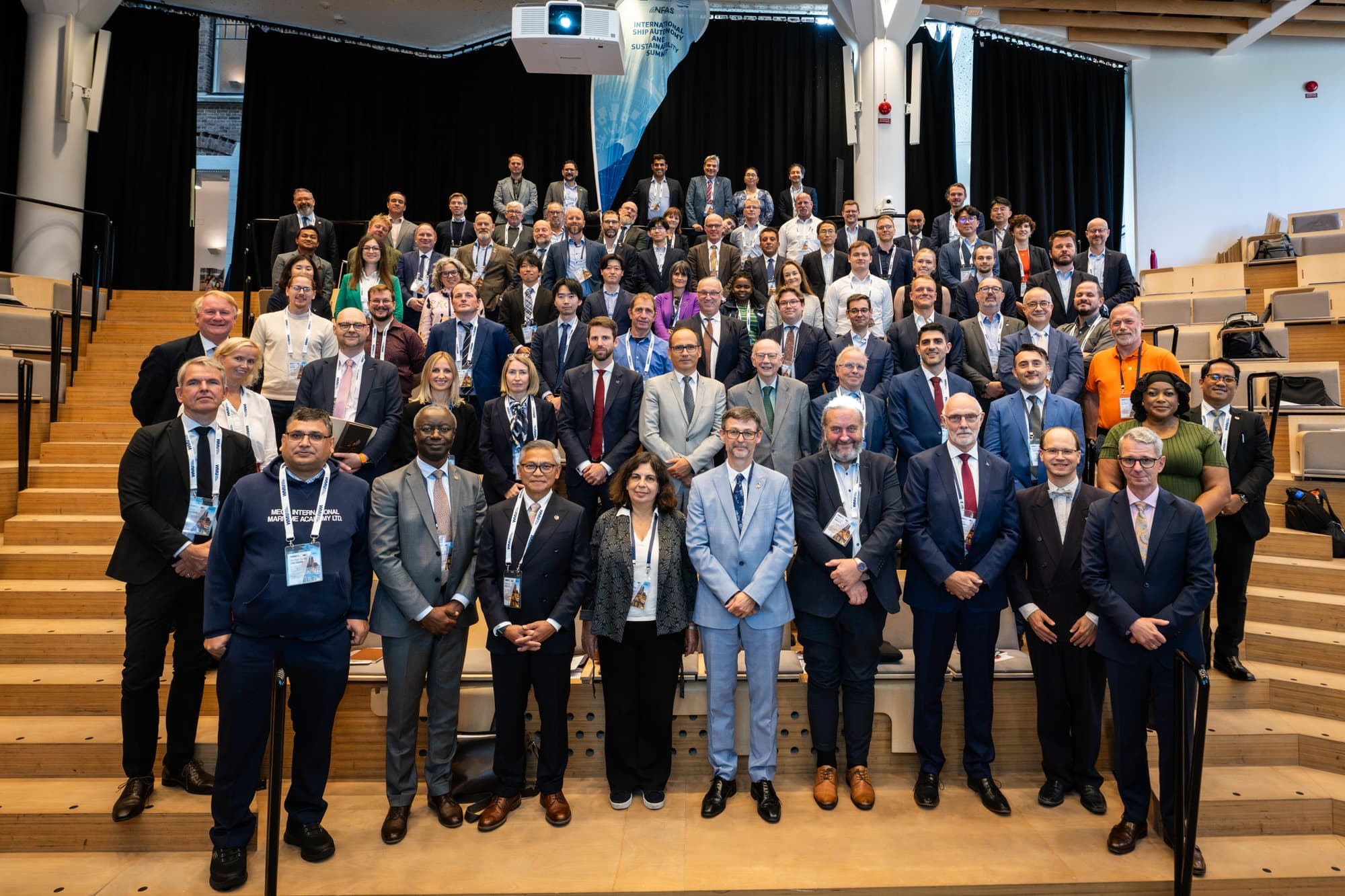
The World Maritime University (WMU) hosted the 7th International Ship Autonomy and Sustainability Summit at its headquarters in Malmö on 10 September. The purpose of the summit was to examine the future of autonomous shipping and the implications of the Maritime Autonomous Surface Ships (MASS) Code.
Co-organized by the European Commission’s Directorate-General for Mobility and Transport (DG MOVE), the Norwegian Forum for Autonomous Ships (NFAS), and WMU, the summit was held in Sweden for the first time under the theme “Towards a Mandatory MASS Code: Moving to the Experience-Building Phase.”
Representatives from international organizations, maritime administrations, industry, academia and technology providers came together to discuss the opportunities and challenges associated with autonomous shipping. With the non-mandatory IMO MASS Code now adopted, discussions focused on how the Code can be used in practice, what regulatory and operational gaps remain, and how experience can be built to support the further development of autonomous maritime operations.
Opening the Summit, WMU President Professor Maximo Q. Mejia, Jr. welcomed the gathering, highlighting WMU’s unique role as a neutral convener for challenges facing the maritime and oceans sectors. Welcome remarks were also delivered by Magda Kopczyńska, Director-General of DG MOVE; Damien Chevallier, Director of the Maritime Safety Division at the International Maritime Organization (IMO); Annika Annerby Jansson, President of the Regional Council, Region Skåne; and Marianne Sivertsen Næss, Minister of Fisheries and Ocean Policy, Norway. WMU also contributed to the programme with presentations from Professor Michael Manuel, Vice President (Provost) highlighting the University's role in maritime education and research, and Professor Jens-Uwe Schröder-Hinrichs, Vice President (Strategic Initiatives) featuring WMU MASS-related research.
The programme included keynote presentations and expert discussions examining the impact of the MASS Code on the maritime sector, international approaches to the experience-building phase, and the regulatory and operational considerations that will shape the development of autonomous ships.
Discussions also explored the role of research and information sharing in addressing remaining gaps, including questions around Remote Operating Centres, emerging operational models and the development of a regulatory framework that supports innovation while maintaining safety. The Summit concluded with a discussion of the key issues emerging from the day and priorities for the next phase of work.


