

WMU and DNV Hellas Advance Maritime Education and the Human Element
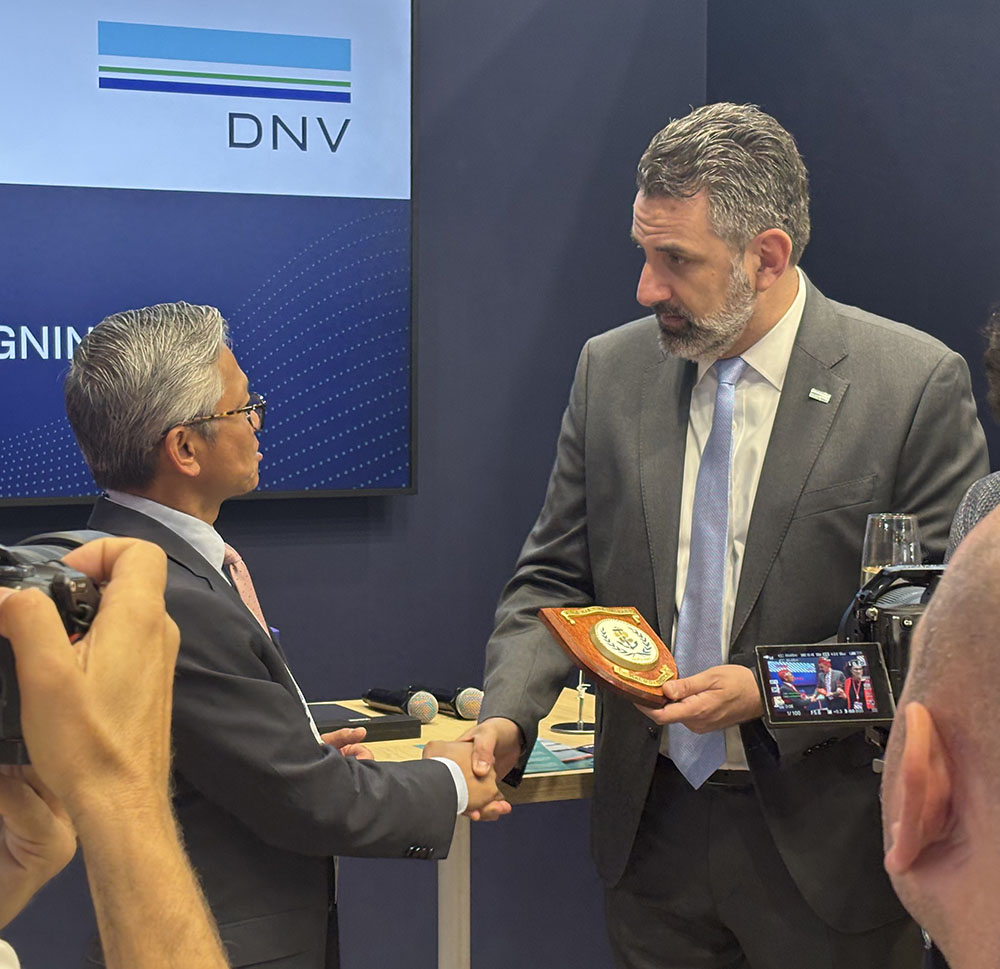
On 4 June, the World Maritime University (WMU) and DNV Hellas (Maritime Academy Hellas) signed a Memorandum of Understanding (MoU) at Posidonia 2026, setting out a framework for cooperation on maritime education and training, academic research, and protection of the marine environment. The signing was accompanied by the launch of a new five-day masterclass, jointly designed, developed, and delivered by WMU and DNV, on the role of the human element in shaping compliance, innovation, and resilience in shipping.
The MoU was signed by Professor Maximo Q. Mejia, Jr., President of WMU, and Mr George Teriakidis, Regional Manager of DNV Hellas. Under the agreement, WMU and DNV will carry out collaborative research in maritime education and training, shipping, port management, and marine environmental protection. The agreement also provides for short-term exchanges of faculty and educators for joint research, teaching, and expert consultation, Field Study Training exchanges for WMU students, and the sharing of academic information, publications, and research materials.
WMU and DNV have partnered for the better part of a decade, combining resources to help turn shared expertise into competence the industry can use and trust. WMU brings internationally recognized expertise in maritime education and research, while DNV brings the technical depth that comes from its leading role in classification, rule development, and experience from their classed fleet.
Across the industry's major transformation challenges—from decarbonization and cybersecurity to AI and enhancing safety—the greatest obstacle is perhaps not the technology itself or the regulations that govern it, but rather preparing the maritime community to adapt to a wider range of new fuels, systems, and processes and operate them safely.
As the latest expression of the long-standing partnership between WMU and DNV, the new masterclass “At the Crossroads of Change: The Human Element at the Core of the Shipping Sector” is designed to bridge the gap between regulations and the people who work with them. It prepares shipping professionals for tomorrow’s operations, sharpening their awareness of security risks, strengthening safety culture and building the leadership, teamwork, and communication skills tomorrow’s workforce will require.
Combining high-level academic instruction with hands-on training, the course examines the human element through the major international conventions (ISM, STCW, MLC,etc.) that govern the industry, considering where compliance succeeds and where the human factor adds risk. Participants will also look at the industry’s competence as it relates to decarbonization, and the shift in the role of the seafarer as automation and AI are poised to play a larger role in operations. The Masterclass also covers the modern security spectrum of cyber, physical, and hybrid threats to vessels and connected systems.
About the World Maritime University
The World Maritime University (WMU) in Malmö, Sweden is established within the framework of the International Maritime Organization (IMO), a specialized agency of the United Nations. The mission of WMU is to be the world centre of excellence in postgraduate maritime and oceans education, professional training and research, while building global capacity and promoting sustainable development. WMU’s vision is to inspire leadership and innovation for a sustainable maritime and oceans future. WMU is an organization by and for the international maritime community and is committed to the United Nations 2030 Sustainable Development Agenda.
About DNV Maritime
DNV is the world’s leading classification society and a recognized advisor for the maritime industry. They enhance safety, quality, energy efficiency and environmental performance of the global shipping industry – across all vessel types and offshore structures. They invest heavily in research and development to find solutions, together with the industry, that address strategic, operational or regulatory challenges. For more information visit: www.dnv.com/maritime
About DNV
DNV is the independent expert in risk management and assurance, operating in more than 100 countries. Through its broad experience and deep expertise DNV advances safety and sustainable performance, sets industry benchmarks, and inspires and invents solutions. Whether assessing a new ship design, optimizing the performance of a wind farm, analyzing sensor data from a gas pipeline or certifying a food company’s supply chain, DNV enables its customers and their stakeholders to make critical decisions with confidence. Driven by its purpose, to safeguard life, property, and the environment, DNV helps tackle the challenges and global transformations facing its customers and the world today and is a trusted voice for many of the world’s most successful and forward-thinking companies. For more information visit: www.dnv.com


