

Exploring Pathways to Maritime Decarbonization at WMU Summer Academy
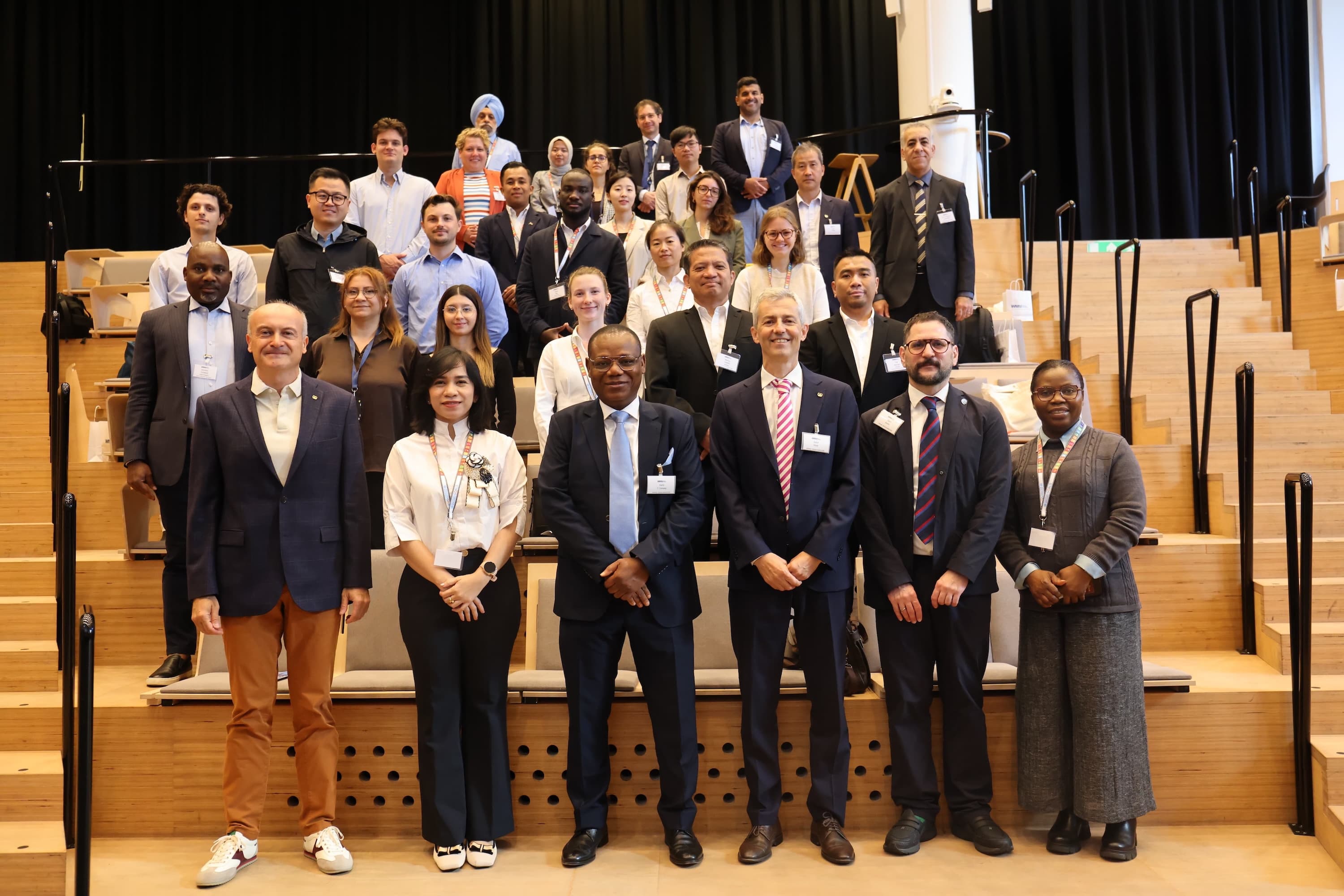
The World Maritime University (WMU) brought together maritime professionals from 13 countries for the 2026 Summer Academy on Maritime Decarbonization from 17–21 August. The sold-out programme reflected strong interest in the challenges and opportunities associated with maritime decarbonization.
The five-day programme provided participants with an interdisciplinary perspective on the challenges and opportunities associated with the transition to a net-zero and energy-efficient maritime industry. Through lectures, discussions and interactive sessions, participants examined the regulatory, technological, operational and economic dimensions of maritime decarbonization.
A broad range of topics were covered, beginning with the international regulatory framework for reducing greenhouse gas emissions from shipping and progressing through ship design and operation, alternative fuels and renewable energy. Participants also explored the role of supply chains and ports, as well as financing mechanisms that can support the maritime energy transition.
The programme was coordinated by Professor Aykut Ölcer and delivered by WMU faculty and researchers, with Dr. Harry T. Conway, Chair of the Marine Environment Protection Committee (MEPC) of the International Maritime Organization (IMO), serving as keynote speaker.
The Summer Academy on Maritime Decarbonization reflects WMU’s role in bringing together academic, industry and other maritime stakeholders to examine complex issues facing the sector and identify pathways towards practical solutions. The programme’s international setting encouraged participants to share experiences and perspectives from different maritime contexts while considering the implications of the evolving regulatory and technological landscape.
Offered annually since 2022, the Summer Academy on Maritime Decarbonization reflects WMU’s ongoing commitment to supporting education, knowledge exchange and capacity development for a sustainable maritime future.
Maritime Decarbonization at WMU
For well over a decade, WMU has supported the maritime sector’s transition to sustainable, low- and zero-carbon operations through education, research and capacity development. The University’s work in Maritime Energy Management takes a holistic approach across the maritime energy system from ships and ports to shipyards and oceans, addressing the safe, efficient and environmentally sustainable use of energy and resources.
WMU’s educational offerings include the Postgraduate Diploma in Maritime Energy, launched in 2014 and delivered through distance learning, and the Maritime Energy Management MSc specialization, introduced in 2015. The Summer Academy on Maritime Decarbonization was launched in 2022. WMU’s research in maritime decarbonization is supported through its Maritime Energy Management Research Priority Area, which focuses on evidence-based approaches to the energy transition across the maritime and ocean sectors.


