

WMU Marks 10th Maritime Business Integrity and Corruption Awareness Seminar
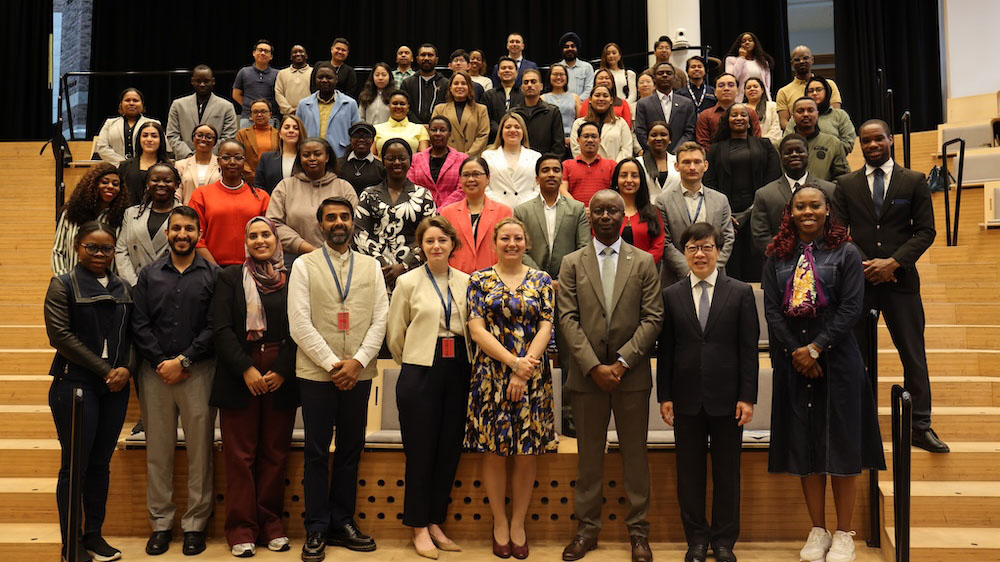
The World Maritime University (WMU) marked the tenth anniversary of its Maritime Business Integrity and Corruption Awareness (CORA) Seminar on 7 July, bringing together experts from academia, industry and government to examine the continuing challenge of corruption in the maritime sector. Held at WMU's headquarters in Malmö, the seminar formed part of the academic programme for the Malmö MSc Class of 2026 and reaffirmed the University's longstanding commitment to promoting integrity, transparency and ethical leadership across the global maritime community.
Chaired by Dr Khanssa Lagdami, Associate Professor of Maritime Labour Law and Policy (ITF Seafarers' Trust), the seminar focused on the persistent challenge of bribery, facilitation payments and other corrupt practices encountered during routine port and transit operations. Discussions highlighted how corruption undermines fair trade, maritime safety, supply chain efficiency and public trust, while placing a disproportionate burden on seafarers and those operating at the frontline of global shipping.
Opening the seminar, WMU Vice President (Provost) Professor Michael Ekow Manuel emphasized that while high-profile events such as disruptions to major shipping routes often capture global attention, less visible concerns also disrupt the uninhibited movement of ships, impeding trade, creating challenges for optimized global logistics chains, negating facilitation efforts of the IMO and raising the costs of shipping. He stressed that addressing corruption requires a sustained and holistic approach that combines education, research, capacity development and strong partnerships to empower leaders who foster institutions characterized by integrity, transparency and accountability.
The seminar was framed within the context of United Nations Sustainable Development Goal (SDG) 16, which calls for peaceful and inclusive societies, access to justice, and effective, accountable and transparent institutions. Discussions reinforced that strengthening integrity and combating corruption are essential to achieving these objectives in the maritime sector, making anti-corruption literacy a core competency for the next generation of maritime leaders.
Drawing on perspectives from industry, government and academia, the programme explored practical approaches to preventing and responding to corruption. Vivek Menon, Chief Operating Officer of the Maritime Anti-Corruption Network (MACN) and a WMU alumnus, shared insights into collective industry action to combat corruption, while Alexandra Belmonte, Chief Compliance Officer at Maersk, and Will Phua, Head of Compliance Operations at Maersk, examined how robust compliance programmes and organizational culture help strengthen business integrity. They emphasized that effective compliance extends beyond policies and procedures, requiring organizations to foster a genuine speak-up culture, maintain strong oversight of supply chains and high-risk transactions, and ensure that compliance programmes are adequately resourced and effective in practice. National perspectives from Hend Shafik of Egypt's Maritime Transport and Logistics Sector and Commander Gonzalo Jiménez of Chile's Aquaculture and Marine Resources Department highlighted the role of transparent governance in addressing maritime corruption and its links to broader challenges, including illegal, unreported and unregulated (IUU) fishing.
A hallmark of the CORA Seminar is its emphasis on applied learning. During the afternoon session, students from each MSc specialization presented case studies examining different dimensions of maritime corruption, applying the knowledge gained throughout the seminar to real-world scenarios and engaging directly with the experts.
Developed in partnership with the Maritime Anti-Corruption Network (MACN), the CORA Seminar has been delivered annually since 2016 and is embedded in the Malmö MSc in Maritime Affairs programme. The seminar forms part of WMU's broader contribution to strengthening integrity in the maritime sector through education, research and capacity development. Beyond the classroom, the University continues to support international efforts through research on maritime governance and anti-corruption, executive education, contributions to international guidance, and collaboration with industry and government partners to promote transparency, accountability and ethical leadership across the global maritime sector.


