

International Day of Education 2026
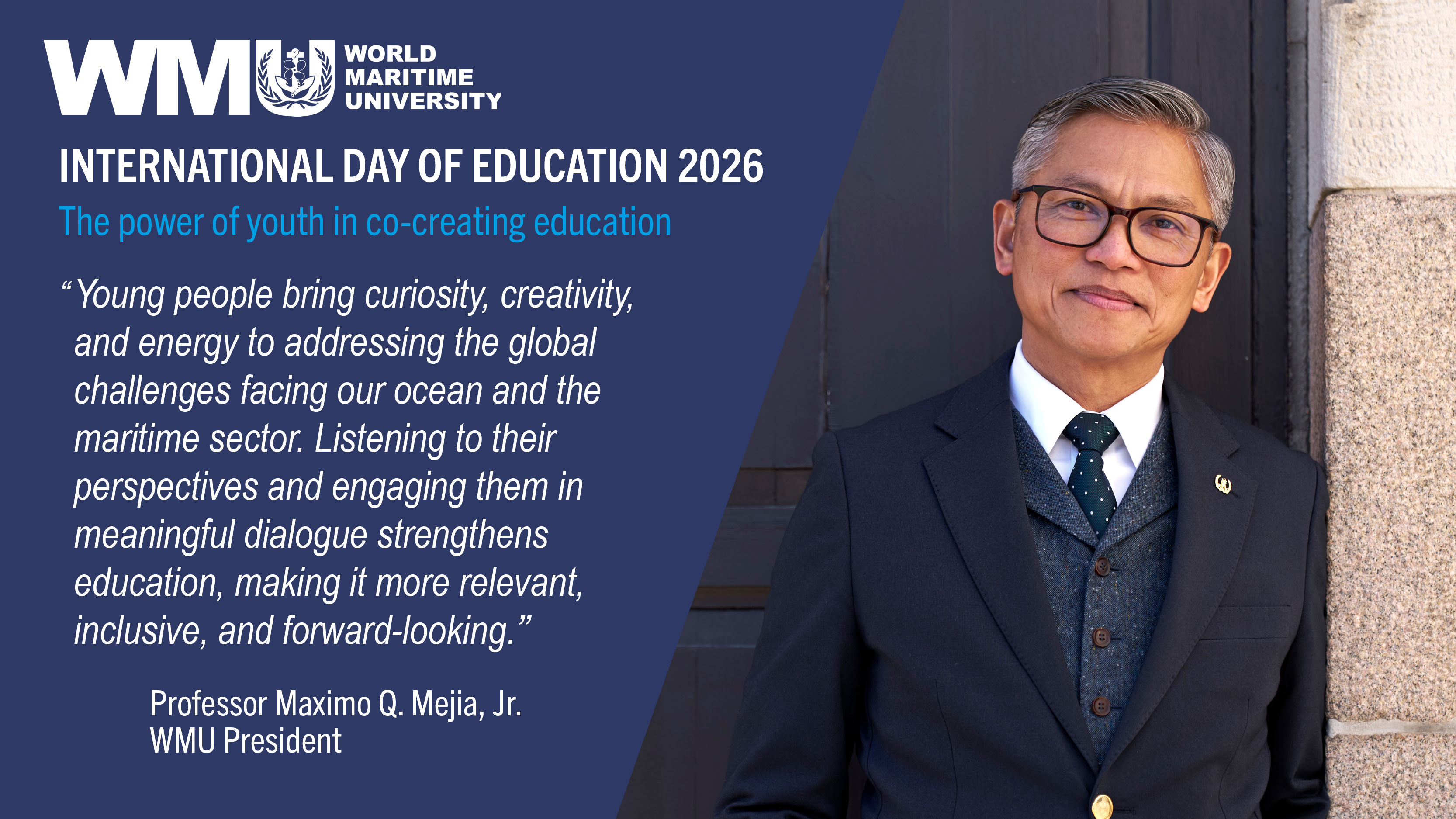
The International Day of Education is commemorated annually on 24 January. The 2026 theme falls under 'The power of youth in co-creating education', highlighting how young people are shaping the future of learning and how everyone can help amplify their leadership.
In recognition of the International Day of Education 2026, Professor Maximo Q. Mejia, WMU President, provided the following message:
“The theme of the 2026 International Day of Education, “The power of youth in co-creating education,” offers an important opportunity to recognize the vital role young people play as partners, innovators, and leaders in shaping the future of learning.
At the World Maritime University (WMU), youth engagement is central to our mission. We are proud to welcome and work with diverse student groups through interactive workshops on maritime and ocean issues, presentations that highlight WMU’s mission and the wide range of career pathways available in the maritime sector, as well as architectural tours of our exceptional headquarters building. Our engagement spans both primary and secondary education, as we actively collaborate with local schools and educational institutions worldwide. Through these interactions, we aim to inspire young people to champion a sustainable future for our ocean and planet, while also emphasizing the essential global role that shipping plays in supporting economies and societies.
Young people bring curiosity, creativity, and energy to addressing the global challenges facing our ocean and the maritime sector. Listening to their perspectives and engaging them in meaningful dialogue strengthens education, making it more relevant, inclusive, and forward-looking. By connecting directly with students, WMU shares the breadth of opportunities across the maritime field while learning from the insights and questions of the next generation.
We are deeply appreciative of our collaboration with youth and educational partners, and we warmly welcome further engagement from schools at both regional and global levels. By empowering youth and amplifying their leadership, we are co-creating education that truly serves the future.”
As the International Maritime Organization’s apex institution for postgraduate maritime and ocean education, the United Nations General Assembly, in its Resolutions on Ocean and Law of the Sea, continues each year to recognize WMU as a centre of excellence for maritime and oceans education, research, scholarship and capacity development. In the maritime context, education and training play a vital role for safe, secure and sustainable maritime and ocean development. WMU is committed to contributing to United Nations Sustainable Development Goal 4 - Quality Education, by educating future maritime leaders, policy-makers and stewards of maritime and oceans sustainable development. WMU is positioned and willing to assist and support, to the greatest extent possible, the capacity-building efforts of all relevant and well-meaning stakeholders through enhanced and life-long maritime/oceans education and training.
About the International Day of Education
In 2018, the United Nations General Assembly adopted a resolution declaring 24 January the International Day of Education, in celebration of the important role of education for the attainment of global peace and sustainable development. United Nations Sustainable Development Goal 4 – Quality Education - is across-cutting goal and a primary driver for the achievement of all 17 UNSDGs. Its primary aim is to ensure inclusive, equitable and high-quality education and to promote lifelong learning opportunities for all. Education is a human right that contributes to individual and societal growth and prosperity and plays a key role in shaping the future of humanity and the planet.


